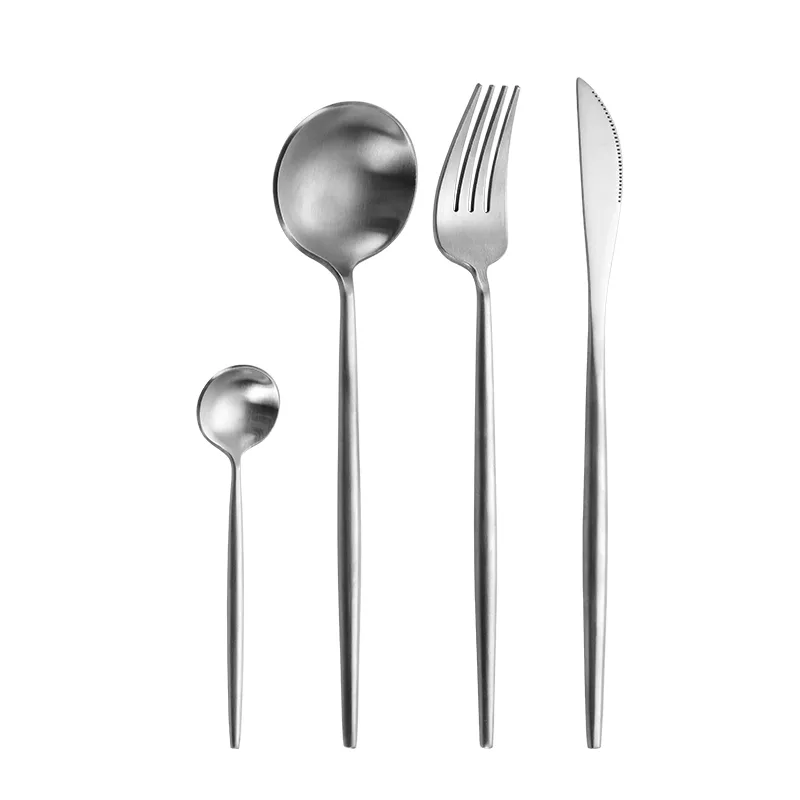
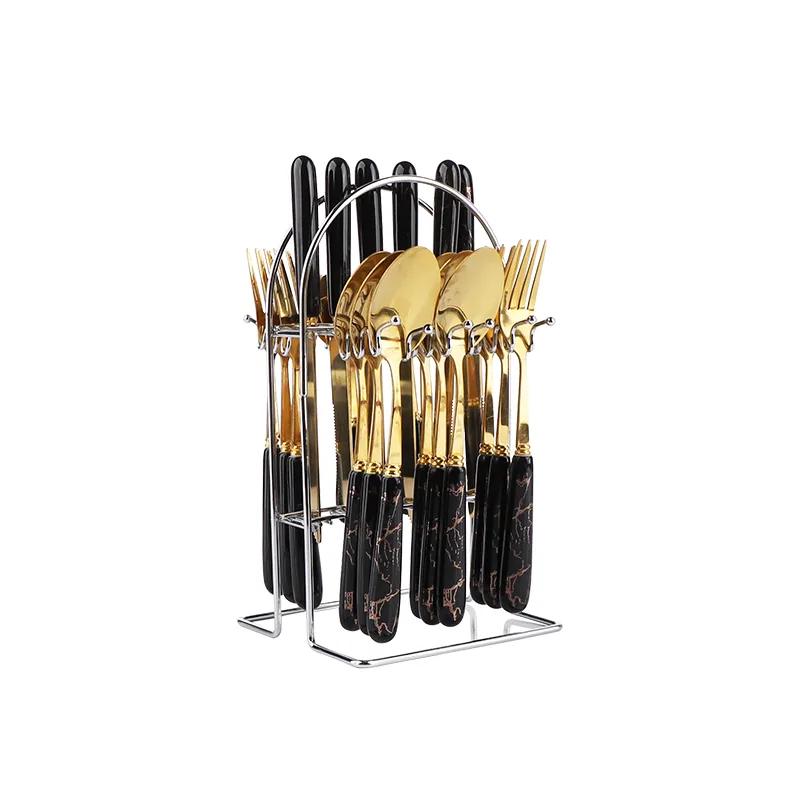
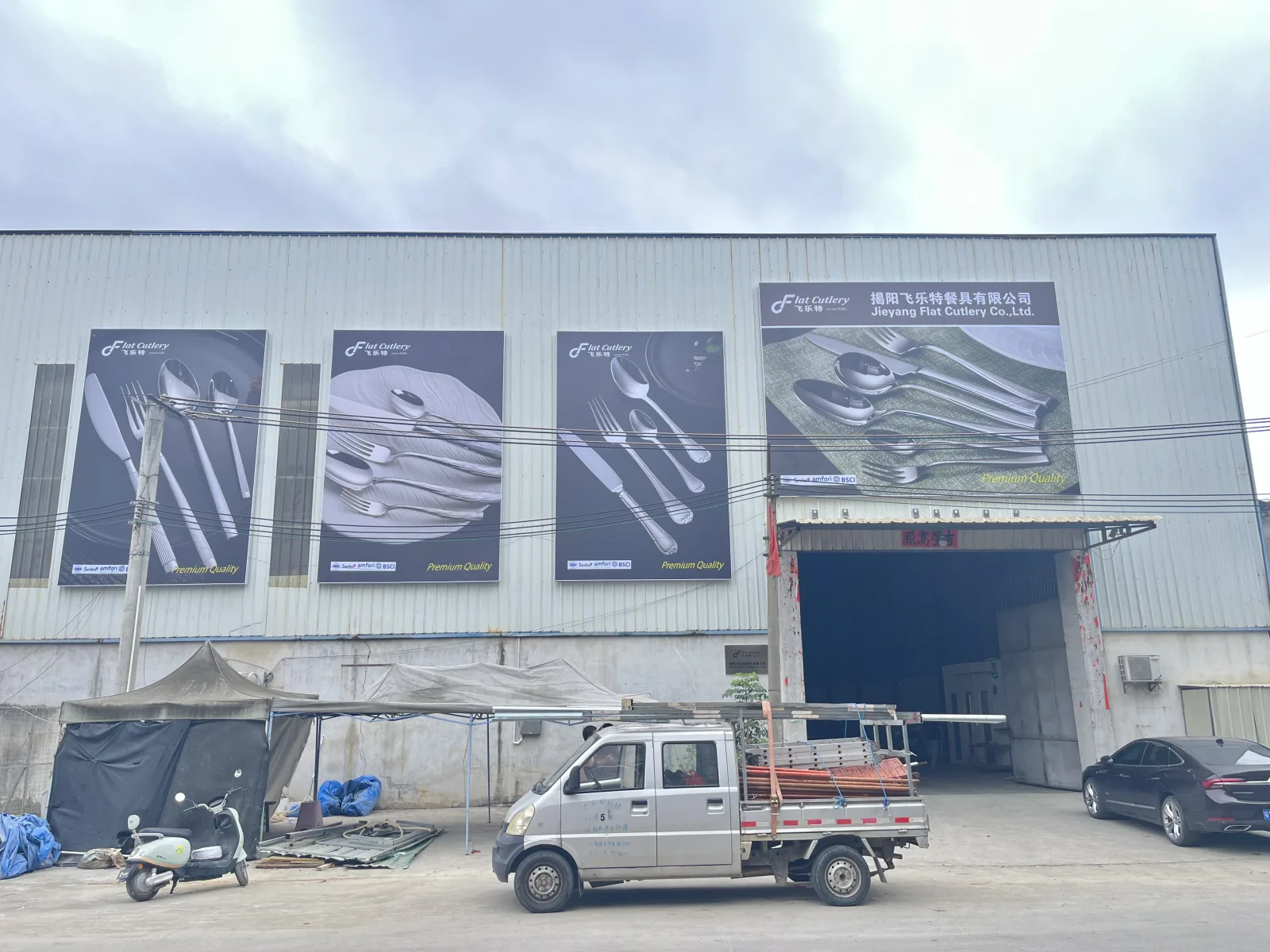
Black, gold and rose gold PVD cutlery sells well for us in South America, especially in Brazil, Chile, Argentina and Mexico, and the same question keeps coming up from importers and supermarket buyers: is the coating safe to eat with?
The short answer is that PVD is a stable, vacuum-applied surface treatment widely used on tableware, and it is not paint. But "PVD" on a quotation tells you only how the surface was finished. Whether a specific product is suitable for food contact depends on the stainless steel underneath, how cleanly the piece was prepared, how the coating process was controlled, and what testing has been done on that exact item. This article explains each of those points from the factory floor.
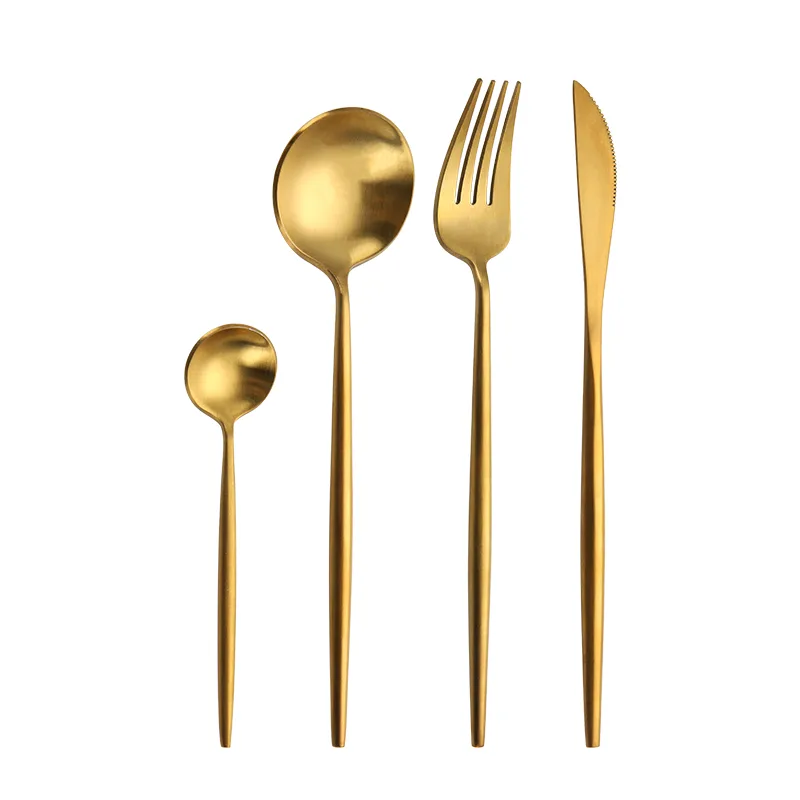
What PVD Actually Is on a Piece of Cutlery
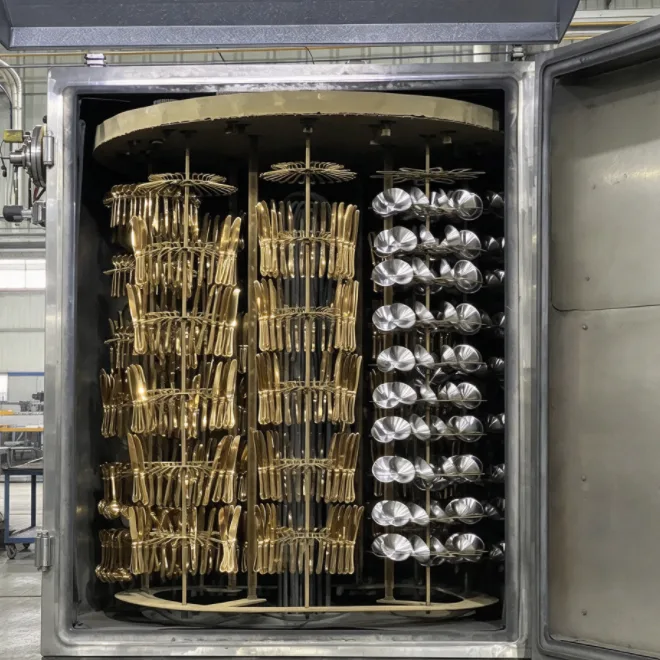
PVD stands for physical vapor deposition. In practice, polished stainless steel pieces are loaded into a vacuum chamber, and a thin coating is deposited onto the surface in a controlled process. It is not a lacquer sprayed on top, and it is not a bath of liquid chemistry.
Two points save buyers a lot of confusion. First, PVD is a finish, not a material. A correct product description reads like "430 stainless steel with a gold PVD finish", with the base steel and the surface named separately. Second, gold PVD is a color, not solid gold. The same process can produce champagne gold, rose gold, black, blue, purple and rainbow tones.
How the Factory Applies PVD, and Where Quality Is Decided
The process looks simple from the outside, but most problems are decided before and after the chamber.
- The cutlery is fully polished and pre-inspected. PVD follows th
e surface it is given, so scratches, pits and drag lines do not disappear under a coating.
- Each piece is degreased, washed, rinsed and dried thoroughly. Any residue left from polishing compound or handling can weaken adhesion.
- Pieces are placed on fixtures with controlled contact points, then loaded into the vacuum chamber.
- The coating recipe is applied to reach the specified color.
- After unloading, the pieces are checked for color, coverage, fixture marks and surface defects.
Where a project needs adhesion, corrosion, dishwasher or food-contact testing, these are carried out for that exact product and process rather than assumed from the finish name.
PVD vs Wet Electroplating and Spray Coating
Buyers often group all colored finishes together, but they are different processes with different things to verify.
PVD is applied in a vacuum chamber after polishing. Water gold plating is a wet-plating route, sometimes used for selected decorative areas, and its gold content, color and wear behavior are project-specific. Spray coating applies a liquid coating that can be matched to a color code or sample, but its chemistry, curing, adhesion and edge coverage need their own approval.
None of these is automatically "safe" or "unsafe". The sensible approach is to ask which process was used and to request verification that matches that process, instead of accepting one general statement for every colored product.
What Buyers Should Check Beyond the Word "PVD"
The base steel matters first. A coating does not replace the compliance of the material underneath, so the stainless steel grade of each component should be confirmed in the product specification. In a set, knives, forks and spoons may use different grades.
Some construction details need extra attention too. Where different materials join, for example around connector areas on mixed-material products, PVD ne
eds engineering review because the interface can create a corrosion risk. Partial PVD, where only part of the piece is coated, requires masking before coating and removal afterwards. That adds labor and can cost more than buyers expect, even though less surface is coated.
Dishwasher suitability should never be assumed. It depends on the coating, handle material, adhesive and packaging instructions, and has to be confirmed for the specific product. Finally, if your market requires food-contact documentation, ask which SKU the report covers and whether it matches the finished, coated product rather than the raw steel only.
Everyday Use and Care
Good care extends the life of any finished cutlery. Wash pieces after use, avoid leaving salt or acidic food on the surface for long periods, and rinse off cleaning chemicals. Skip steel wool and harsh abrasive cleaners, which can scratch a coated surface. Dry the cutlery before storing it in a clean, dry place. Appearance over time depends on use and care, so buyers should avoid promising unlimited color retention to end customers.

Frequently Asked Questions
Is gold PVD cutlery made of real gold?
No. Gold PVD is a surface finish applied to stainless steel to give a gold color. It is not solid gold.
Can PVD cutlery go in the dishwasher?
It depends on the exact product, coating, handle material and packaging instructions.
Is PVD the same as electroplating?
No. PVD is a vacuum coating process. Electroplating, including water gold plating, is a wet process. Each needs its own verification.
Need OEM/ODM Flatware Support?
Share your product type, finish, material and quantity requirements. Our factory team will help with quotation and catalog support.

 Luxury Vantage Designs 18/10ss Golden Cutlery Set of 24 Pieces
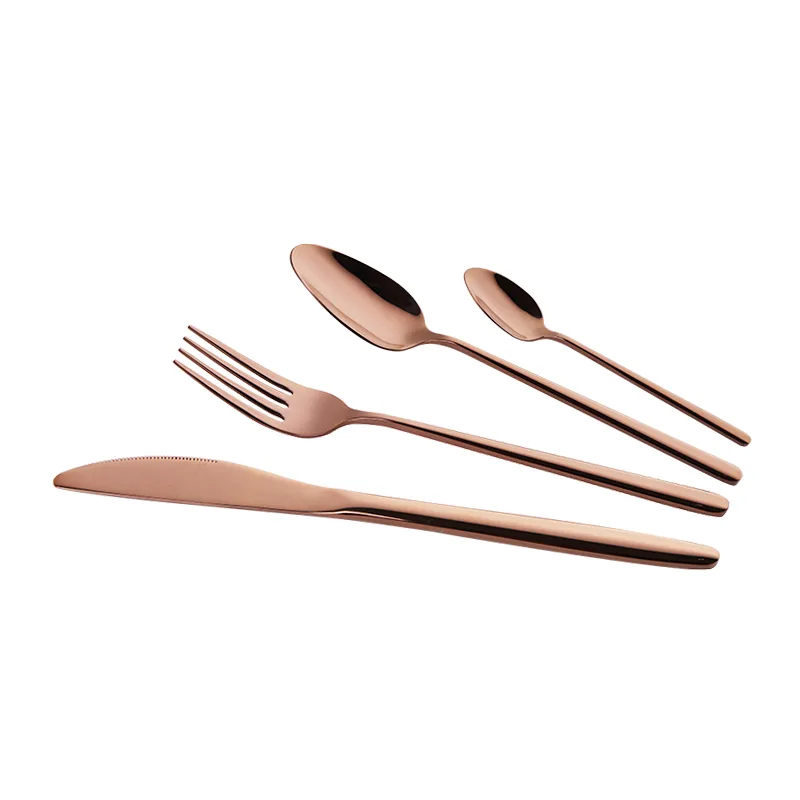 13/0 Stainless Steel Rose Gold 16pcs Tableware Dinner Set
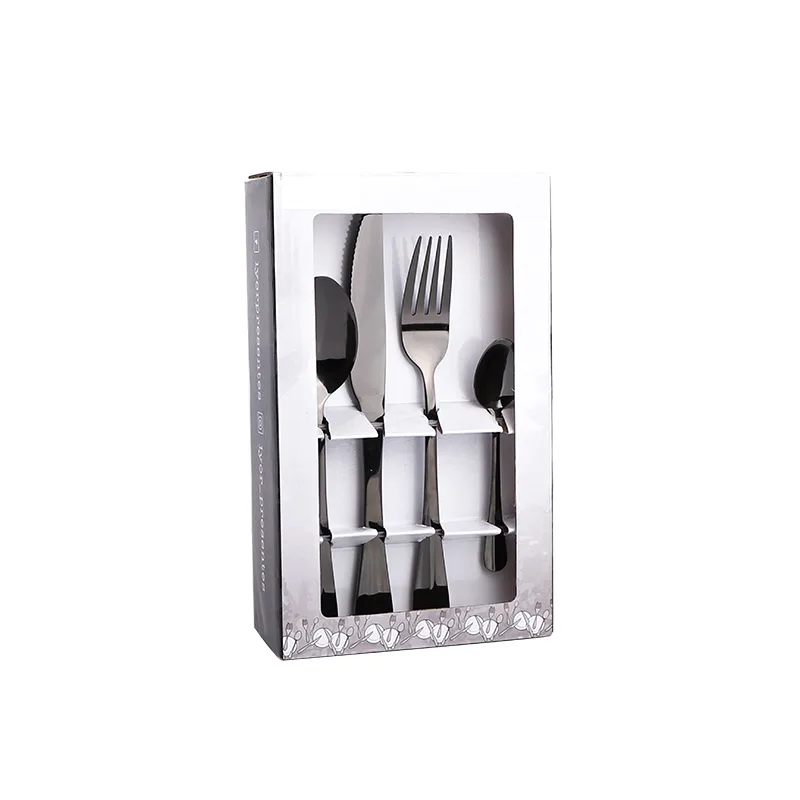 Hot Sale Black Mirror Polish Cutlery Set for Giveaways
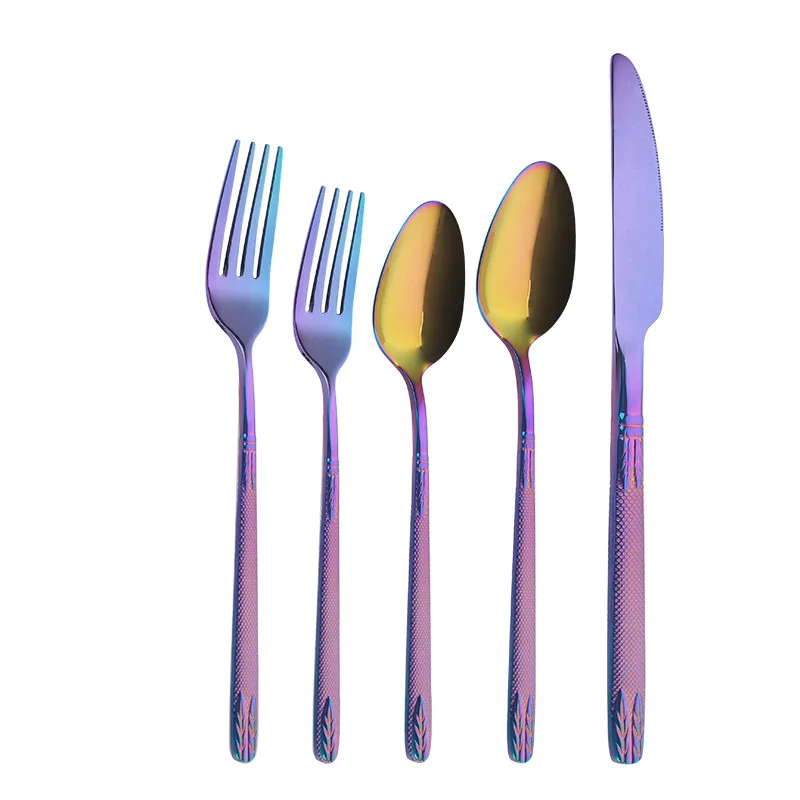 20PCS PVD Rainbow Colored Stainless Steel Cutlery Set