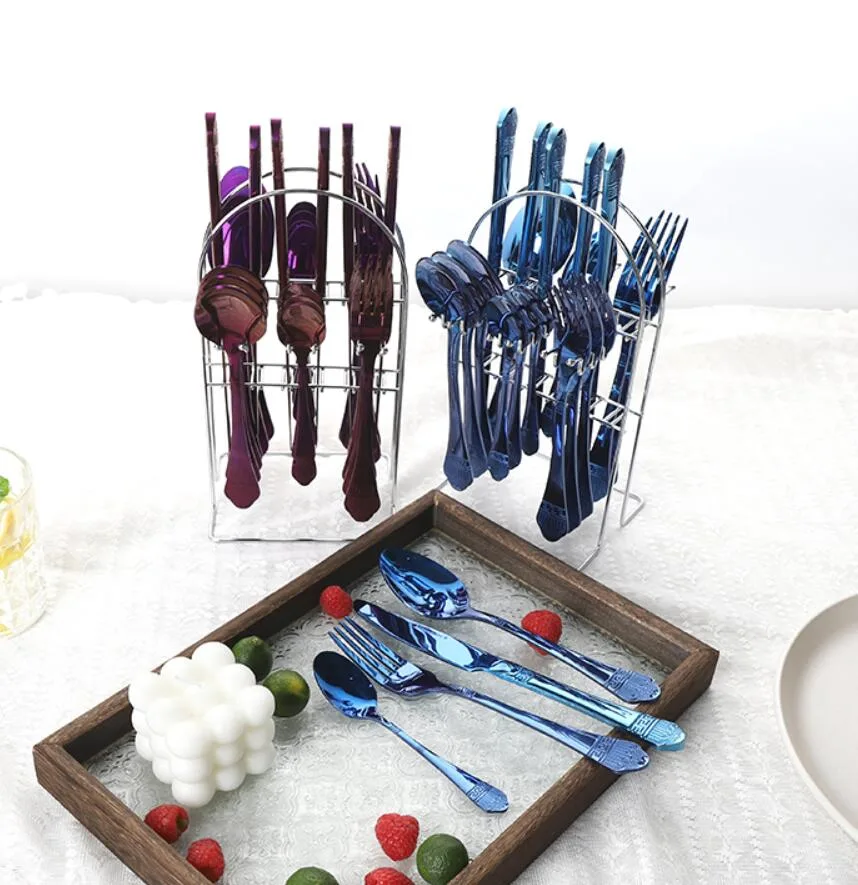
When visiting a tableware store, you might notice an interesting phenomenon: stainless steel forks and spoons appear in gold, rose gold, or even rainbow colors. How do these colors get on the utensils? What is the "PVD coating of titanium" that merchants often talk about? More importantly, does it really not fade?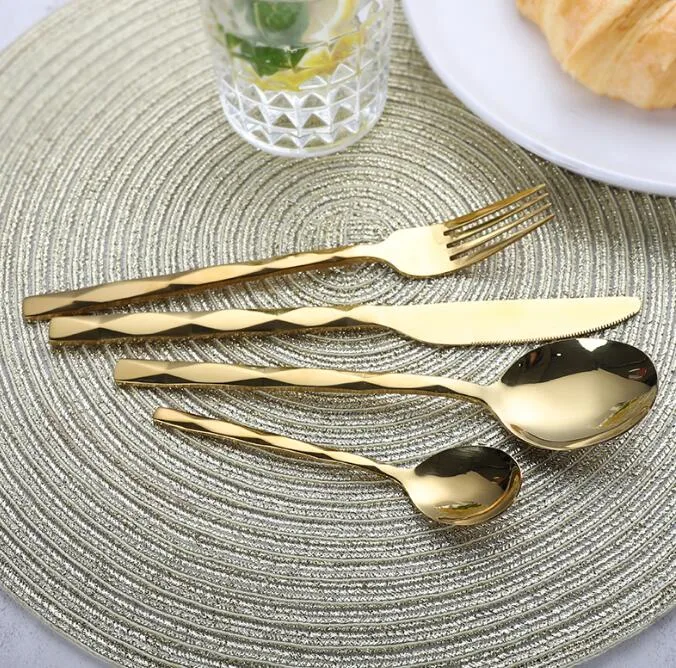
What is PVD coating of titanium?
PVD is the abbreviation of Physical Vapor Deposition. In simple terms, in a vacuum environment, solid metals (such as titanium) are bombarded with high-energy to turn into gaseous atoms. These atoms fly onto the surface of the stainless steel cutlery set manufactured in Chinese factory and re-solidify to form a very thin metal film - 12. The entire process does not involve chemical reactions, so it is called "physical" vapor deposition.If it is titanium and nitrogen gas is introduced, titanium atoms will combine with nitrogen atoms, forming a titanium nitride (TiN) coating on the surface of the utensils. This coating is golden in color and has high hardness and wear resistance - 1. This is the essential difference between "titanium coating" and "gold coating" - gold coating is attaching a layer of gold on the surface, while titanium coating is allowing the titanium compound to "grow" on the surface of the utensils to form a ceramic-like hard protective film.
Why is PVD titanium coating more durable than ordinary electroplating?
When many people hear the word "coating", their first reaction is that it will "fade", which is actually confusing PVD with traditional electroplating.The coating in traditional electroplating is relatively loose and prone to peeling off during use. While PVD coating is carried out in a high-vacuum environment, the target material atoms are bombarded with high kinetic energy to fly onto the surface of the utensils and deeply embed into it, forming a very dense film layer - 12. The bonding force between the two is completely different - high-quality PVD coating has an adhesion strength that can reach the point where it cannot be torn off with tape.
Is it really not going to fade?
This question depends on how you understand "not fading".From the material itself, the durability of PVD titanium coating is indeed very excellent. Titanium nitride coating has a hardness much higher than the surface of ordinary stainless steel, and its wear resistance is 3 to 5 times that of electroplating - 12. Under normal use - cutting food, washing with a dishwasher - it will basically not peel off. However, the PVD coating is only 0.5-2 micrometers thick, approximately one-fiftieth of a hair - 12. It is essentially a very thin film. In extreme cases, if this layer is damaged, the underlying stainless steel will be exposed. For example, prolonged exposure to strong acidic liquids (lemon juice, vinegar) or violent scrubbing with a steel wool brush can cause damage to the coating - 2.In addition, if the process parameters are not controlled properly, if the coating thickness is lower than 0.3 micrometers, the wear resistance will sharply decrease - 2. Therefore, "not fading" is not only related to the process itself, but also depends on the technical level of the processing factory.
How to determine if PVD titanium-coated tableware is safe and reliable
If you plan to purchase or purchase PVD titanium-coated flatware wholesale from China, you can pay attention to several key points.The first is food safety certification. High-quality PVD coating can pass food-grade tests and meet the requirements of the US Food and Drug Administration (FDA) and the European Union (EC) 1935/2004 regulations, without harmful substance migration - 6-3. When purchasing, you can ask the supplier to provide corresponding food contact test reports.Secondly, coating quality. There is an international standard (ISO/DIS 23100) specifically for PVD decorative coatings, which has clear evaluation methods for PVD coatings on kitchen and bathroom products in terms of color, fading, corrosion resistance, wear resistance, and adhesion - 5-9. Regular manufacturers should be able to provide relevant test results.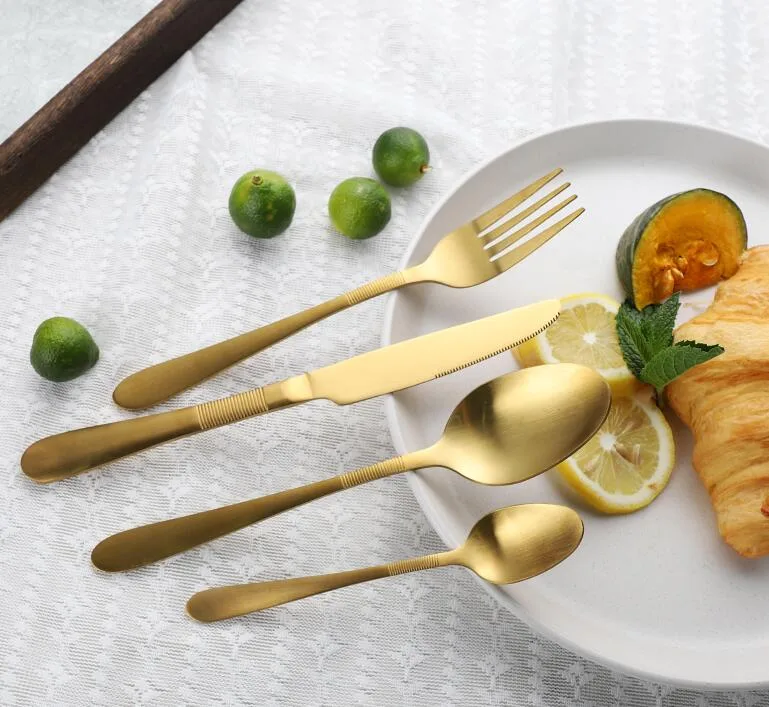
Practical suggestions
If it is for household use, pay attention to these points when purchasing: PVD titanium-coated tableware produced by regular manufacturers is fine for daily use and washing in a dishwasher; avoid scrubbing with steel wool; If you notice obvious scratches or peeling on the coating, it indicates that the process might not be up to standard.If it's a buyer, it is recommended to make a sample and conduct a simple adhesion test (such as a tape pull test) after that. At the same time, ask the supplier to provide a food contact test report and wear resistance test data. For high-end PVD titanium-coated tableware, the color can be made to be almost colorless to the naked eye - up to level 12 - which is an important indicator for measuring the technical level of the factory.
Need OEM/ODM Flatware Support?
Share your product type, finish, material and quantity requirements. Our factory team will help with quotation and catalog support.

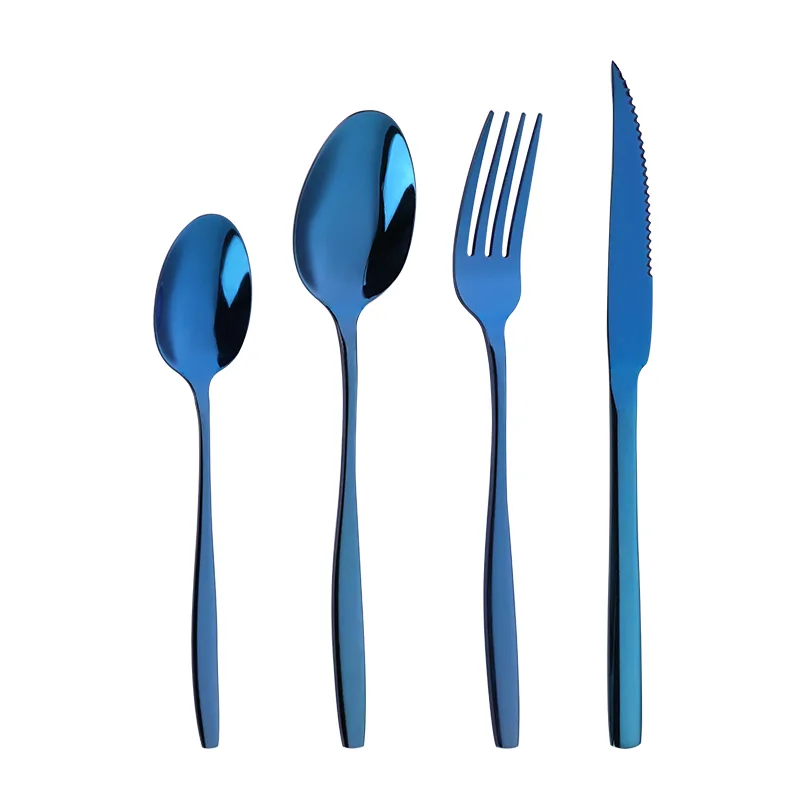 Jieyang Stainless Steel Cutlery Set Blue PVD Modern Flatware For Restaurant
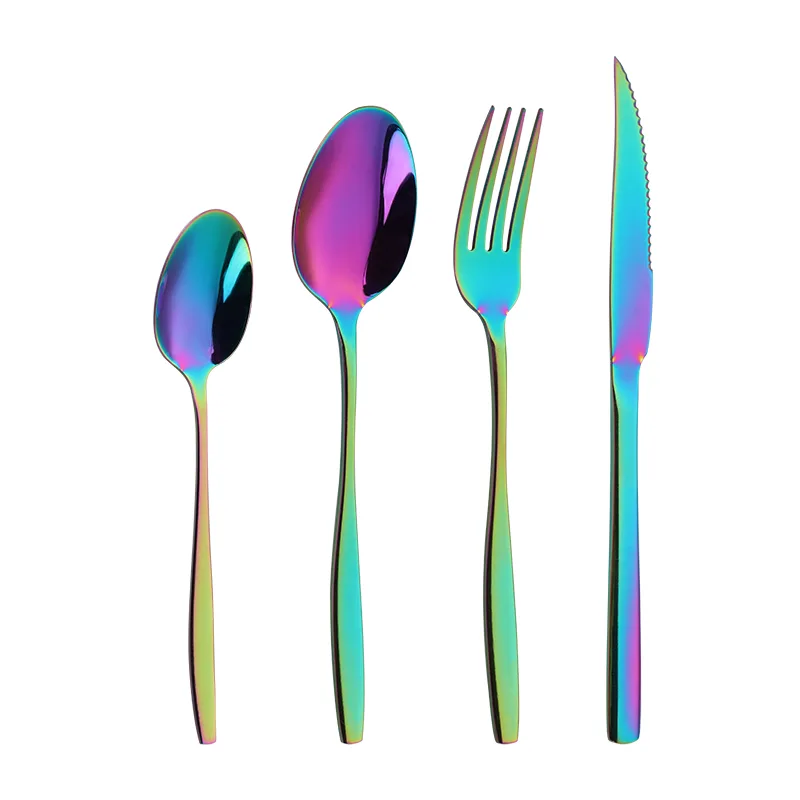 Stainless Steel Cutlery Set Rainbow Titanium Coated Luxury Flatware Collection
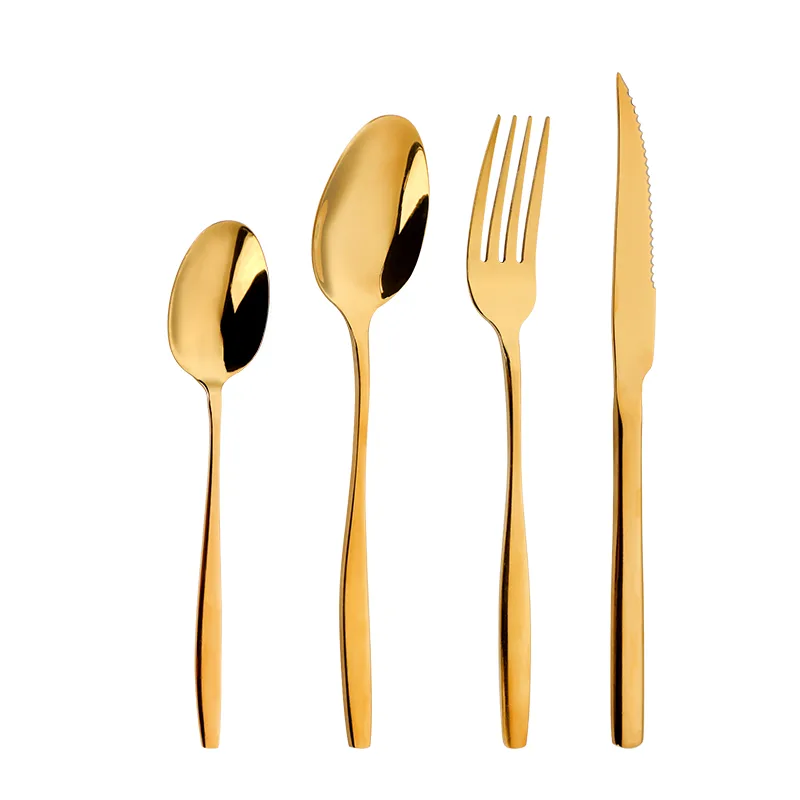 Jieyang Stainless Steel Cutlery Factory Golden Ion Plating 18/0 Flatware Set
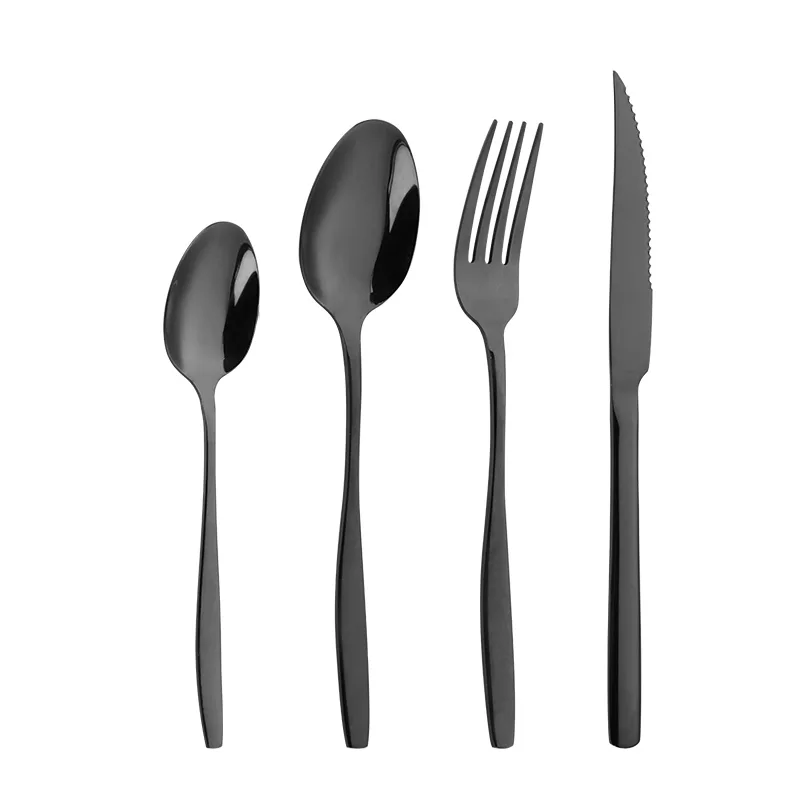 Jieyang Stainless Steel Cutlery Factory 18/0 Mirror Polish 20 Pcs Flatware Set